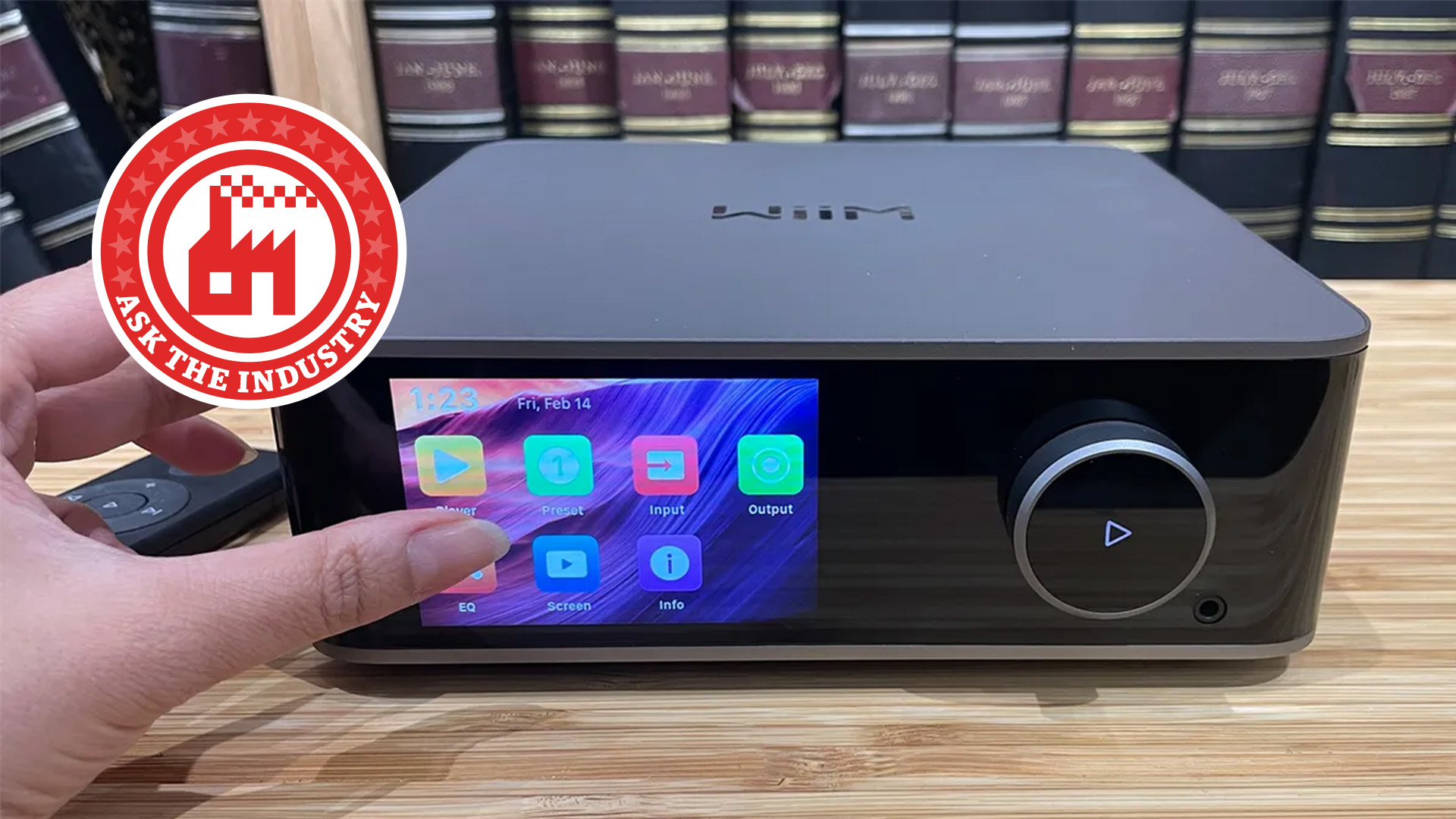


There’s a common misconception that music streamers are simply about the qualities of their digital chipsets alone – that is, the computer-like streaming module that pulls digital music data from the cloud (from Tidal’s server, say) and packages it into a smooth constant data stream, and the digital-to-analogue converter (DAC) that then turns that data stream into an analogue waveform the rest of your hi-fi system can understand. It somewhat stems from the broader fallacy that digital audio’s inherent ‘ones and zeros’ makeup means that there can be limited differentiation in their delivery.But as eloquently illustrated by Cambridge Audio, such chips are comparable to how an orchestra performs: “If the conductor isn’t very good, the orchestra won’t perform as well as they can.
However, if the conductor is surrounded by poor musicians or the wrong instruments, again the performance won’t be as good as it could be.” Indeed, while chipsets do matter, and it is true that all streamers perform one stage of the process with parity (which we’ll get to), their audio performance is predominantly down to how the chips are implemented. As Paul Neville from Harman International told us, “Engineering a high-quality music streamer requires a holistic approach to the signal path, from the network input to the final analogue output.

”So what exactly matters in music streamer design? Here’s what experts over at Audiolab, Cambridge Audio, Chord Electronics, Cyrus, d.