

Image: Rajeev Singh NEW DELHI: More than 1,70,000 words. Over 400 articles. 106 amendments.
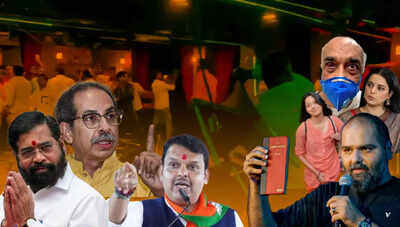
The sheer scale of the world’s longest Constitution may seem overwhelming — until one realises that much of the debate often circles back to a single article: Article 19 . Not because it gives you wings, but because the party in power decides how high you fly. The article was at the centre of the political discourse when comedian Kunal Kamra 's indirect criticism of Maharashtra's deputy CM Eknath Shinde sparked a massive controversy, particularly after Shiv Sena workers went on a rampage, vandalising Mumbai's Habitat studio, where the comic had performed.

What followed was predictable yet revealing. Rivals of the ruling Mahayuti and opposition parties rushed to back Kunal Kamra, criticising the Yuti alliance for its silence on the issue. Their major argument in Kamra's defence was his right to speak and express.
Mahayuti vs MVA over Kunal Kamra But do political parties truly stand for freedom of speech and expression? Or do they defend Article 19 when in opposition and hide behind 19(2), which talks about reasonable restrictions, when in power — using it as a tool of convenience? There have been ample instances when parties took action against critics, merely for sharing a cartoon or writing a one-liner - let alone being actively involved in criticism. The same Uddhav Thackeray 's Shiv Sena, which is in the forefront to defend Kamra, assaulted and shaved the head of a Wadala man .