

I’ve been reflecting deeply on the accelerating role of artificial intelligence (AI) and what it means for our society; not just in theory or policy, but in our everyday lives. The conversations around AI tend to feel far removed from the rhythms of daily existence in even our key cities of Accra, Kumasi, Tamale or Takoradi, but I believe we are at a turning point, and we must choose wisely. Recently, I came across a tweet that stirred something in me.
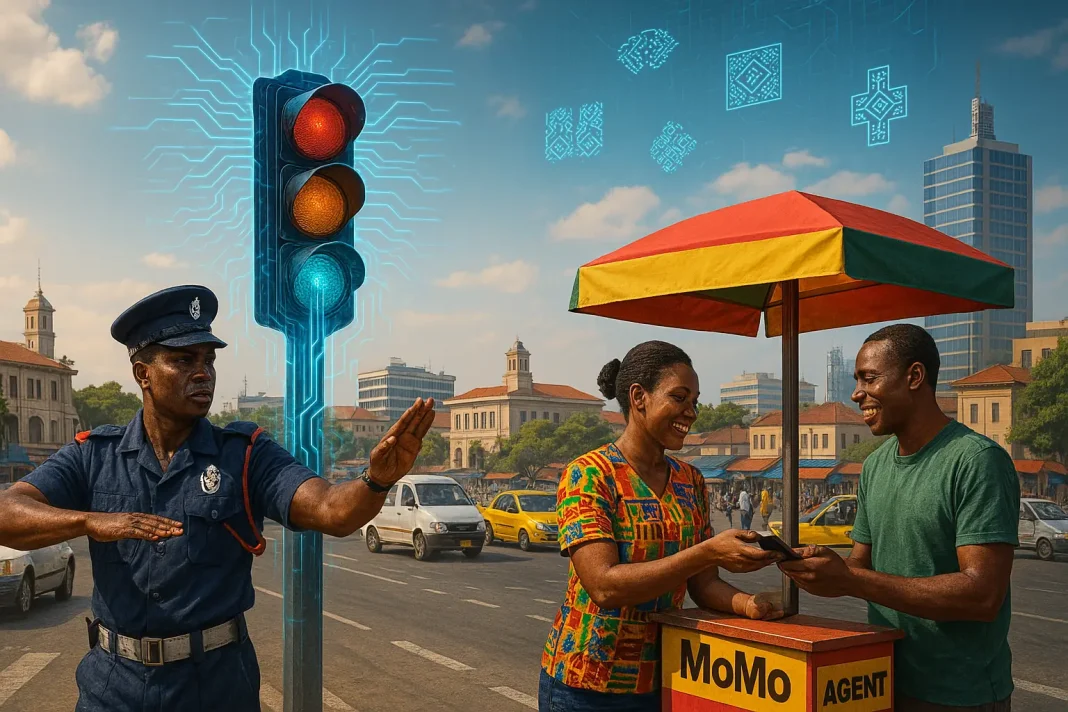
It referenced a LinkedIn comment by a South African lawyer, Sazi Tshangana, who wryly noted that while American lawyers are panicking about being replaced by AI, in parts of South Africa, intersections are still manned by human traffic officers rather than automated traffic lights. It’s funny, yes, but also profoundly telling. The same happens in Ghana.

I often come across policemen and sometimes even community volunteers manually directing traffic, even at intersections where traffic lights exist. It’s not always because the infrastructure is absent; sometimes the lights are simply not working, or the situation is too chaotic for automation to handle. But deeper than that, it reflects a kind of trust in human discretion and presence.
There’s something reassuring, even if inefficient, about seeing a uniformed officer using hand signals to bring order to morning rush-hour madness. It’s a reminder that technology doesn’t always replace—it sometimes just coexists. And think about how we handle money.
Despite the prol.